eBay integration
eBay sales arrive beside every other channel you sell on, and everything you do with them — shipping, refunds, cancellations — goes back to eBay from the same screen.
Orders are pulled in with their items, quantities, buyer notes and payment status, and they keep up with eBay afterwards: a buyer cancellation or a status change is picked up rather than leaving a stale record here.
Because they sit next to your Amazon, Shopify and Etsy orders, the people packing boxes work one list rather than a browser tab per marketplace.
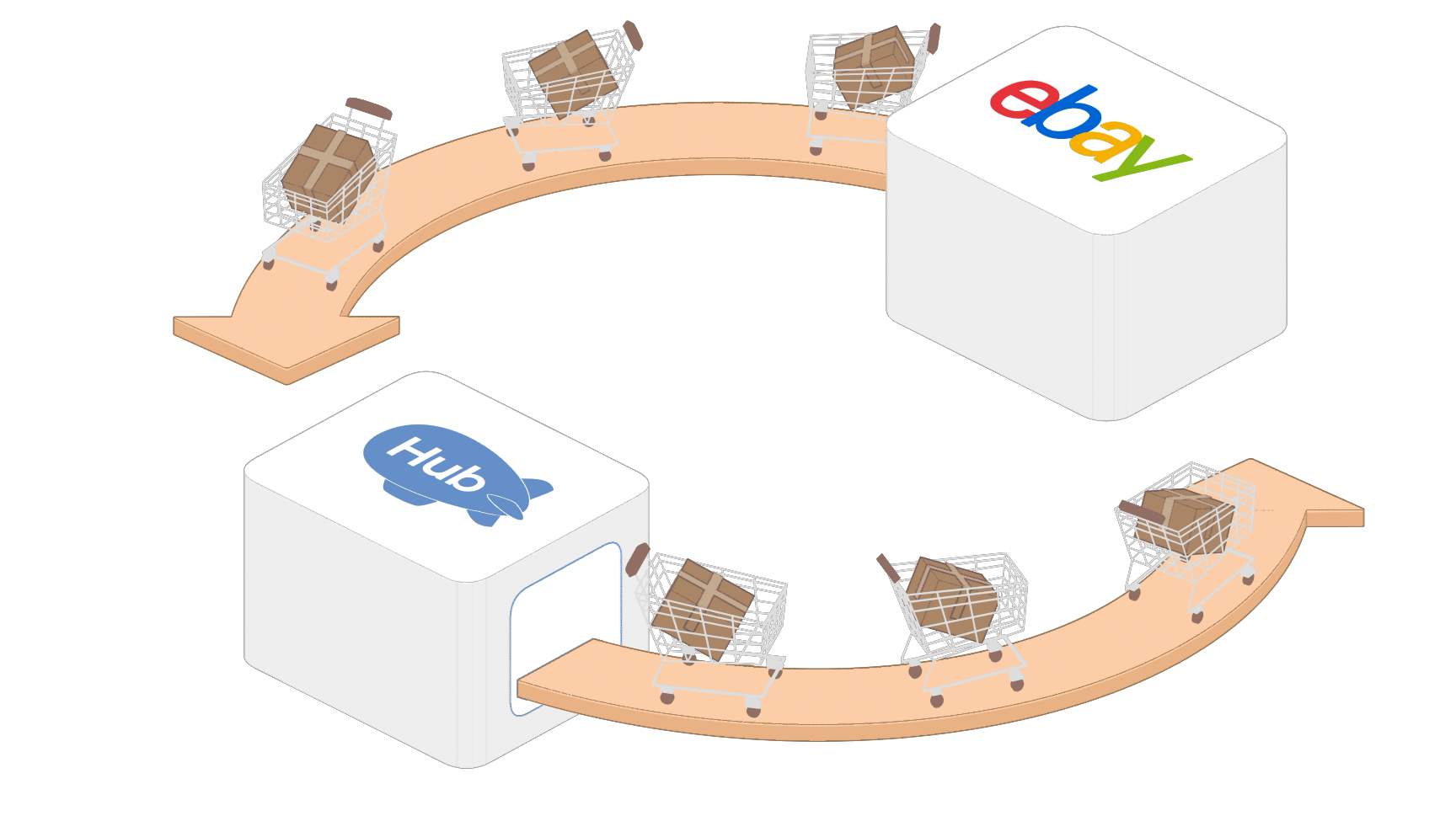
Each action is pushed to eBay and reflected on the order here.
Confirm a parcel with its carrier and tracking number and eBay records it as a shipping fulfilment — which is what moves the order to Shipped for the buyer.
eBay's unit is the package, not the line item, so items going in one box are confirmed together — which is how they'll actually arrive.
Raise a refund with an eBay reason and an amount. The outcome is read from eBay's response rather than assumed, so a refused refund doesn't look like a successful one.
Cancel an order you can't fulfil. eBay cancels whole orders rather than single lines, and the dialog is explicit about that before you commit.
Orders feed the same stock level your listings publish from, which is what stops the last unit selling twice and costing you a defect.
Orders are collected on their own schedule and shipping confirmations go out as you mark parcels away, without anyone logging into Seller Hub.
New orders raise a notification, so a quieter channel doesn't go unnoticed until someone thinks to check it.
What comes in, what goes back, and how eBay's own rules shape it.
No questions in this category.
Connect Amazon, eBay, Shopify and Etsy in minutes. Centralize inventory, automate listings, and let AI handle the busywork — so you can focus on selling more.
 Amazon
8 active
eBay
6 active
Amazon
8 active
eBay
6 active
 Shopify
5 active
Shopify
5 active
 Etsy
3 active
Etsy
3 active